


How much CBD does your body actually absorb? Explore how gummies, tinctures, vaping, and topical products compare, why dietary fats matter, and practical ways to make more informed CBD choices.


Editor's Note (2026):
As more people explore making their own cannabis edibles at home, understanding the process behind consistent results has become just as important as the recipe itself. Decarboxylation is one of the most essential—and often misunderstood—steps in that process.
In a recent episode of Just Say KNOW with Maria (“50 is the New 420”), we explore how cannabis use has evolved across generations—from uncertainty and stigma to a more informed, intentional approach. Tools like decarboxylators reflect that shift, helping bring greater consistency, control, and confidence into the modern cannabis kitchen.
If you’ve ever made your own cannabis edibles or tinctures, you’ve likely come across the term decarboxylation. Here’s a simple overview:
Decarboxylation is the process of applying heat to cannabis to convert its raw, inactive compounds—THCA and CBDA—into their active forms, THC and CBD by removing a carboxyl group (COOH). 1
This transformation is what makes cannabis functional in edibles, tinctures, capsules, or topicals. Without decarboxylation, these products may not produce the expected effects.
So, what is a decarboxylator?
A decarboxylator is a device designed to handle this process using controlled, consistent heat. Instead of estimating temperature and timing in an oven, a decarb machine automates activation for more predictable results. 2
🐝 As someone who has used a decarboxylator to make infused salad dressings with cannabis, rosemary, and garlic, I’ve found it to be a true set-it-and-forget-it experience—with consistent results and minimal cleanup.
A cannabis decarboxylator—sometimes called a decarb machine—is a compact kitchen appliance designed to activate cannabinoids using controlled heat over time. 2
Some devices combine decarboxylation and infusion in a single unit. This allows you to activate cannabis and infuse it directly into butter, oil, or honey without transferring between tools.
Many modern decarboxylator systems are fully automated, requiring little more than a button press to complete the cycle from start to finish.
A weed decarb machine is designed to prepare cannabis for use in edibles, tinctures, and other infused products by activating cannabinoids through controlled heat. In practical terms, it helps take raw plant material and make it usable in recipes that require decarboxylated flower, kief, or hash. 6
🐝 I’ve personally found it especially useful for infused olive oils used in simple recipes like rosemary-garlic dressings—where consistency really matters.
Trusted in Maria's Kitchen – Reliable, Potent & Mess-Free

Ardent FX
Effortless, odor-controlled decarb infusion in one sleek device.
The Ardent FX takes the guesswork out of home infusion with precise temperature control, a sealed chamber for smell-free operation, and easy-clean design—delivering lab-grade potency every single time.
Some decarboxylator systems go beyond activation and combine both decarboxylation and infusion in a single unit. Models like the LEVO II+ and LEVO Lux are designed to streamline the process from raw plant material to infused oil, butter, or honey. 5
🐝 From experience, this kind of setup supports a more hands-off workflow with fewer steps and more predictable results. Once a cycle starts, there’s little need to intervene, which can make the overall process feel more approachable—especially for those newer to making infusions at home.
Maria's Everyday Go-To — Sleek, Smart & Reliable

LĒVO II +
Stylish, Precise & Effortless to Use
The LEVO II+ blends modern design with digital precision, giving you consistent, mess-free decarbing and infusing at the touch of a button. Its kitchen-friendly look and hands-free operation make it a true staple in any home infusion routine.
Save $100 FROM LEVO
While oven decarboxylation is possible, dedicated devices are designed to provide a more controlled environment. 3
If you’ve ever tried decarbing cannabis in your kitchen oven, you know it’s part science, part gamble, and requires attention to detail. While technically possible, the oven method leaves a lot to chance—temperature fluctuations, timing, and airflow can all influence the outcome.
Here’s a general comparison:
| Feature | Oven Decarboxylation | Decarboxylator Machine |
| Temperature Control | Inconsistent — ±20°F fluctuations depending on oven calibration | Designed for stable, controlled heat throughout the process |
| Consistency | May vary based on conditions (under- or over-decarbed) | More repeatable under controlled settings |
| Ease | Requires monitoring, stirring, and timing | Automated cycles simplify the process |
| Odor | More noticeable in an open-air kitchen | Often more contained |
| Cleanup | Baking trays and liners | Self-contained chamber, minimal cleanup (one chamber to clean) |
| Functionality | Decarbs only | Some models also infuse |
| Beginner-Friendly | Can involve trial and error | More guided, device-driven process |
Practical takeaway:
An oven can work, but a decarboxylator offers more consistency for regular use. I’ve used both—and I wouldn’t go back to the oven. With a weed decarb machine, I get reliable potency, no mess, and more time to focus on what I want to make—like cannabis-infused rosemary-garlic salad dressings. It’s an essential tool in my cannabis kitchen.

Even when you use the same recipe, results can vary from batch to batch. And more often than not, it’s not just about dosage—it’s about process.
Factors like:
…can all influence how cannabinoids are activated, preserved, or degraded.
If you’ve ever wondered why one batch feels stronger—or weaker—than another, you’re not alone. This is one of the most common (and least understood) challenges with homemade edibles.
If you want to better understand what’s happening—and how to approach it with more consistency—this short breakdown walks through the key variables:

This is a deeper dive into the mechanics behind infusion—designed for people who are already experimenting and want to refine their process with more confidence and control.
There’s no one-size-fits-all when it comes to choosing a cannabis decarboxylator. The right machine depends on how often you make edibles or infusions, your preferred batch size, and how you like to work in the kitchen. 10.
🐝 From experience, ease of use and cleanup can make the biggest difference over time.
TMaria's Compact Pick – Simple, Quiet & Reliable
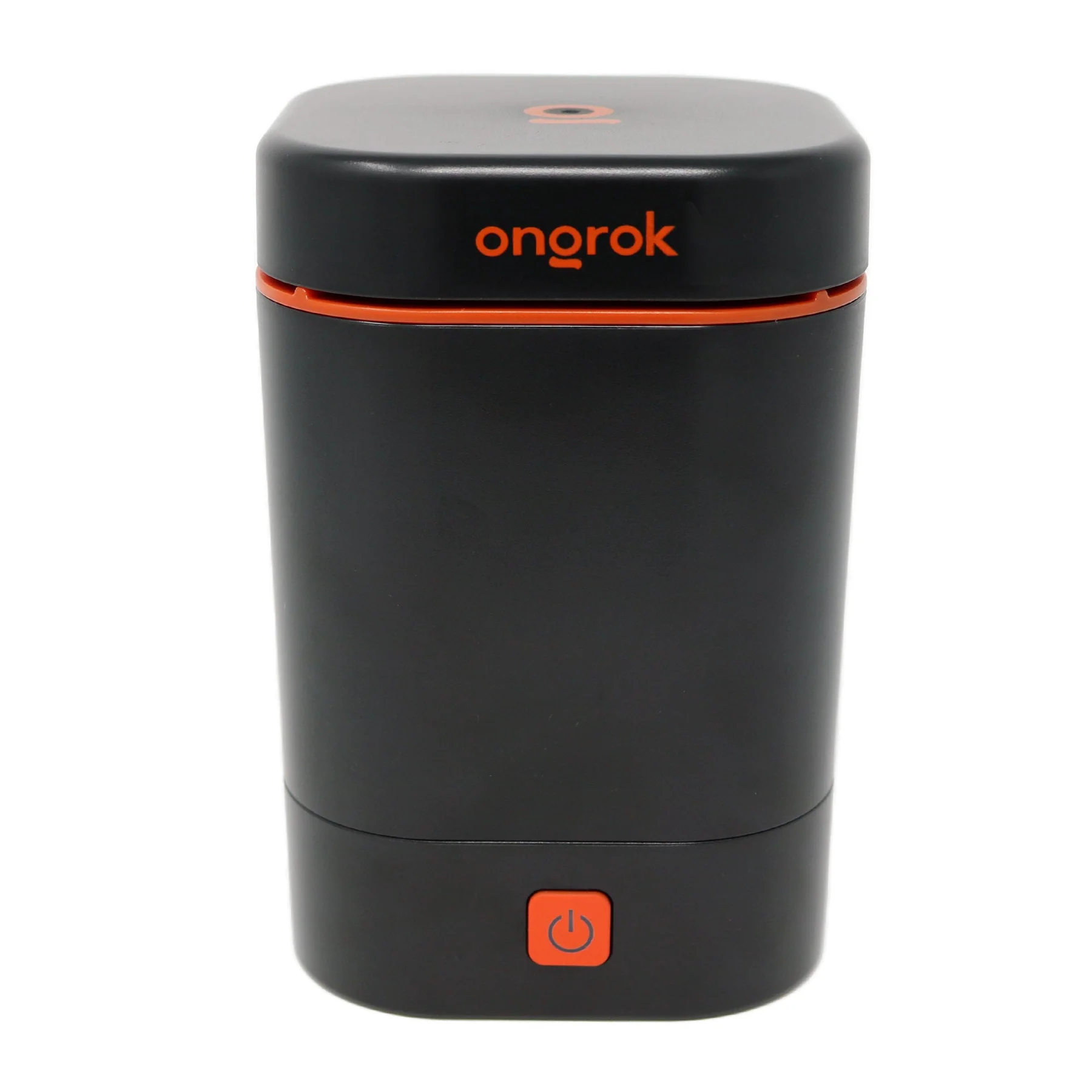
ONGROK Decarboxylator
Small But Mighty
The ONGROK Decarboxylator makes home activation effortless with one-touch operation, precise temperature control, and an odor-blocking design.Compact, discreet, and travel-friendly, it’s perfect for beginners or small-batch infusers who want clean, consistent results every time.
Save $50 from HeadShop
Decarboxylators help activate cannabinoids in a more controlled, repeatable way.
With the push of a button, these devices are designed to:
Decarboxylation plays a key role in how cannabinoids in edibles and infusions. 23
Yes—decarboxylation is what converts THCA and CBDA into THC and CBD. Without this step, cannabis used in edibles or tinctures may not produce the expected effects. 7
→ Learn more in our Complete Guide to Decarboxylation in an Oven.
Yes. Like flower, kief needs to be decarboxylated before it’s used in edibles or infusions.
→ See: How to Decarb Kief at Home Easily
A small reduction in weight—typically around 10–15%—can occur during decarboxylation due to moisture loss and the release of carbon dioxide. This does not necessarily indicate a loss of cannabinoids. 4
No. Once decarboxylated, cannabis can be stored in an airtight container and used later. Proper storage helps maintain its usability over time. 8
Yes. Decarboxylation activates cannabinoids so they can more effectively bind with fats or alcohol during infusion. Skipping this step may lead to less consistent results. 9
Not exactly—but some machines combine both steps into a continuous process. Devices like the LEVO and Ardent FX automate decarboxylation followed by infusion, reducing the need to transfer materials and simplifying the workflow. 5


How much CBD does your body actually absorb? Explore how gummies, tinctures, vaping, and topical products compare, why dietary fats matter, and practical ways to make more informed CBD choices.
Explore what plant-based medicine is, how cannabis and other botanicals fit within it, and why emerging research is reshaping conversations about natural therapies and wellness.
Explore the connection between cannabis, hormones and the endocannabinoid system—and what research tells us about menopause symptoms from sleep and mood to pain and brain fog.
Curious about cannabis yoga? Explore why people combine cannabis and yoga, what they report experiencing, what the research says, and potential risks to consider.
How much CBD does your body actually absorb? Explore how gummies, tinctures, vaping, and topical products compare, why dietary fats matter, and practical ways to make more informed CBD choices.
Explore what plant-based medicine is, how cannabis and other botanicals fit within it, and why emerging research is reshaping conversations about natural therapies and wellness.
Explore the connection between cannabis, hormones and the endocannabinoid system—and what research tells us about menopause symptoms from sleep and mood to pain and brain fog.
Curious about cannabis yoga? Explore why people combine cannabis and yoga, what they report experiencing, what the research says, and potential risks to consider.
Copyright © 2026 Green Bee Life | Green Bee LLC, is a subsidiary of Green Life Media, Inc., a full service creative agency and production company.
